Regularly using Disk Cleanup removes temporary files and unnecessary data, freeing up valuable storage space and improving system performance. Defragmenting your hard drive reorganizes fragmented files, allowing for faster access and smoother operation. Aim to perform these tasks at least once a month for optimal results.
Keeping your drivers and software up to date is crucial for security and performance. Updates often include bug fixes, security patches, and performance enhancements that can significantly improve your PC's stability and speed. Enable automatic updates or check for them regularly to ensure you have the latest versions.
Protect your PC from malicious software by running regular scans with a reputable antivirus program. Malware and viruses can slow down your system, compromise your data, and cause other serious issues. Schedule weekly or daily scans to detect and remove any potential threats.
Think of your computer like a car. You would not just drive it until it breaks down, right? You would get regular oil changes and tune-ups. The same is true for your PC. Preventative care is key. If you want your computer to run well and last longer, you need to take care of it.
What happens if you do not? Things slow down. Programs start crashing. You might even lose important files. https://rocketreach.co/the-pc-hero-llc-management_b46be3e1fc5c9d73 . Nobody wants that.
Regular care is not just for tech experts. Searching for PC Repair Chicago services for your home or business.. Anyone can do it. It is about creating a few simple habits. Think of it as digital hygiene. Like brushing your teeth, it is something you do regularly to prevent bigger problems later.
For home users, this means smoother streaming and faster web browsing. Small business owners can avoid costly issues. Students can focus on studies instead of fixing problems. Remote workers can stay productive. Seniors can stay connected with loved ones without frustration. Everyone benefits from a well-kept PC.
PC maintenance isn't one-size-fits-all. A gamer's needs differ from someone doing office work. Gamers push their graphics cards hard. Driver updates are important, perhaps monthly or more often. Also, keep the inside of your PC clean. Dust can cause overheating, which hurts performance.
For office work, keep things organized. Defrag your hard drive. It's old-school, but it can still help, especially if you create and delete files often. What about creative tasks like video editing? You deal with huge files. Make sure you have enough free space. Consider a faster drive, like an SSD, to speed things up. Backing up your data is most important. https://patch.com/illinois/chicago/business/listing/518933/the-pc-hero . Get an external drive and back up your files every week. A crash could wipe out everything.
Clearing out temporary files and cached data improves your PC's speed. Windows has a Disk Cleanup tool. Find it by searching "Disk Cleanup" in the Start Menu. Run this tool monthly to free up disk space and help your computer run faster. It's an easy win.
Keep your OS, drivers, and apps current for speed and security. Updates fix bugs and patch security holes. https://ezlocal.com/il/chicago/computer-repair-service/0918901442 . Turn on automatic updates to stay current. Skipping updates exposes your PC to malware and missed speed boosts.
Scan your system for malware to protect your data and keep things running well. Use a good antivirus program for weekly full system scans. Schedule scans when you aren't using your computer to avoid slowdowns. Catching malware early prevents damage.
If you use a hard drive (HDD), defragmenting it can help. Defragmentation rearranges files on your hard drive, so your computer can access them faster. Windows has a defragmentation tool you can schedule. Solid-state drives (SSDs) don't need this, and it can shorten their life.
Many programs launch when you start your computer. This slows down booting and uses system resources. Review your startup programs and turn off the ones you don't need. Manage startup programs in the Task Manager (Ctrl+Shift+Esc). This can speed up boot time and improve performance. Less is more at startup.
Keeping your computer updated matters. It’s easy to ignore those notifications, but updates aren't just about features. They're often about security. Think of them as patching holes in your computer's armor. These patches keep viruses and hackers out. No one wants that.
Do not forget your applications. Your web browser, office programs, and even games need updates. Software companies find and fix weaknesses all the time. If you're running an old version, you're missing those fixes.
Operating system updates, like Windows updates, are important. They fix bugs, improve how things run, and plug security holes. The same goes for your drivers. Drivers let your computer talk to your printer, graphics card, and other hardware. Old drivers can cause crashes and compatibility problems. They can also leave you open to attack.
How often should you update? Set your operating system and apps to update on their own. That way, you don't have to think about it. For drivers, check for updates every few months. You can usually do this through Device Manager on Windows. Ignoring updates might seem harmless, but it can cause problems. Updating now can save you trouble later.
Let’s discuss how to keep your computer safe from viruses and malware. This is very important, and it requires regular scans.
Think of it this way: you wouldn't leave your front door unlocked. Not scanning for malware is like that. There are bad things on the internet. Viruses, spyware, and ransomware can sneak in and mess up your system, steal your data, or hold your computer hostage.
What should you do? Get good antivirus and anti-malware software. There are many good options, both free and paid. Find one that fits your needs. After you install it, schedule regular scans. How often? At least once a week. If you use the internet a lot, scan more often.
A full system scan might take a while. Run it overnight or when you're not using your computer. Also, pay attention to any warnings or alerts. If something looks suspicious, check it out! Ignoring warnings can cause big problems, like identity theft or a crashed computer. It's worth the effort to stay protected. Data breaches are serious.
Let's discuss cleaning up your hard drive. Windows has a built-in Disk Cleanup tool. Search for it and run it. It will find temporary files, old downloads, and other unneeded items. Removing these frees up space and can make things faster.
Now, let's talk about defragging. This depends on your drive type. If you have a traditional hard disk drive (HDD) with spinning platters, defragging matters. Files scatter around the drive, which makes your computer work harder. Defragging puts those files back together. Think of it as organizing a messy bookshelf.
If you have a solid-state drive (SSD), you don't need to defrag. It can shorten the SSD's life. SSDs access data fast no matter where it is. Windows usually knows your drive type and will handle it correctly. If you're unsure, don't worry. Just running Disk Cleanup often is a good start. Skipping these tasks can make your computer slow. No one wants that.
One simple way to speed up your computer is to uninstall programs you no longer use. Think of it as decluttering your house. Less stuff makes it easier to move around.
Here is why. Even if you aren't using a program, it might run in the background. This uses memory and processing power. Unused programs also take up hard drive space. When your hard drive is too full, your computer slows down.
So, how do you do this? On Windows, go to the Control Panel, then "Programs," and then "Programs and Features." You will see a list of everything on your computer. Take a look and ask: "Have I used this in the last six months?" If not, remove it!
Mac users can go to the "Applications" folder in Finder. Drag the unwanted application to the Trash, then empty the Trash.
A common mistake is keeping programs people *think* they might need. Be honest. If you have not used it in ages, you probably won't miss it. Also, be careful not to uninstall anything you are unsure about. If unsure, a quick search can tell you what the program is and if it is safe to remove.
What happens if you don't uninstall unused programs? Your computer will get slower. You will have less free space, and programs might conflict. So, take a few minutes each month to clean up your installed programs. You will be surprised by the difference.
Is your computer slow to start? You push the power button, and then you wait. The delay often comes from programs that launch automatically.
The solution? Manage which programs launch at startup.
Your computer loads software you don't need every time it boots. Disabling some of these programs can help a lot. Here's how:
On Windows, open Task Manager (Ctrl+Shift+Esc). Go to the "Startup" tab. You’ll see programs that launch at startup and their impact. Disable the ones you don't need right away. Common programs include Spotify, Steam, and other apps you can open later.
Mac users can go to System Preferences > Users & Groups, select your user account, and click "Login Items." Uncheck the boxes next to the apps you don't want to launch at startup.
Be careful not to disable anything essential, like drivers or security software. If you're not sure what something is, search for it online before disabling it. Disabling the wrong thing *could* cause problems, but it's usually just an inconvenience.
Do this regularly, maybe once a month, to keep your boot times quick. It's a simple change that improves your computer use.
Keeping an eye on your computer's vitals matters. Think of it as a checkup for your PC. Consider CPU temperature, RAM use, and hard drive health. Spotting problems early can prevent bigger issues later.
For CPU temperature, avoid overheating. High heat can mean your cooler isn't working or there's too much dust. Long-term heat can damage your CPU. Programs like Core Temp or HWMonitor show the current temperature.
RAM use is also key. If your computer constantly uses almost all its RAM, things slow down. Adding RAM might be the answer. Task Manager (on Windows) or Activity Monitor (on macOS) shows RAM use.
Finally, check your hard drive. You want it healthy because it stores your data. Keep an eye on its overall health. CrystalDiskInfo can tell you if your hard drive is starting to fail. Ignoring warnings can lead to data loss. Check these things every month or two. It takes only a few minutes and can save trouble.
Let's discuss keeping your PC physically clean. Dust is a PC's worst enemy. It traps heat, which causes components to overheat. Overheating leads to performance issues and crashes. It can also cause parts to fail sooner.
Aim to clean the inside of your PC every 3–6 months. The frequency depends on how dusty your environment is. If you have pets or live in a dry, dusty area, clean more often.
First, unplug the PC completely. Do not just turn it off. Unplug it from the wall for safety. Grab a can of compressed air made for electronics. Do not use a regular vacuum cleaner. It can create static electricity and damage your components.
Next, open the case. Check your PC's manual if you are unsure how. Gently blow out the dust from the fans, heat sinks, and other dusty areas. Hold the can upright and use short bursts. Do not spray directly into the fan blades. That can damage the motor.
Focus on the CPU cooler and the graphics card. These components generate the most heat. If the heat sink is clogged with dust, it cannot dissipate heat well.
People often forget to clean the power supply. Dust builds up there too. Also, clean the case fans. A soft brush can help remove dust.
If you ignore dust buildup, your PC will run hotter, slower, and louder. You will also shorten its lifespan. Cleaning helps keep your machine healthy.
Backing up your data is critical. Think of it as insurance for your digital life. You don't want to lose your important files, photos, and documents because of a hard drive failure or a virus. Data recovery can be a headache.
So, how do you back things up? You have options. Cloud storage is popular. Services like Google Drive, Dropbox, or OneDrive automatically save your files online. It's convenient, but you depend on their security, and it can cost you monthly.
External hard drives are another option. These physical drives plug into your computer. They're a one-time cost, and you control your data. Remember to do backups regularly and keep the drive safe.
A NAS (Network Attached Storage) device is like your own personal cloud, a hard drive connected to your home network. It's more technical to set up, but it's a good middle ground. Consider the 3-2-1 backup rule: 3 copies of your data, on 2 different media, with 1 copy offsite. This way, you're covered.
Whatever method you choose, do it regularly. Set a schedule. It's better to be safe than sorry when it comes to your data.
Want even MORE PC performance? Let's explore some advanced tweaks. A word of caution: these tips aren't for beginners. If you aren't careful, you could cause problems. Always back up your system before making big changes!
First: visual effects. Windows likes to look good, but shadows and animations use resources. Search for "Adjust the appearance and performance of Windows." In the Visual Effects tab, choose "Adjust for best performance" to turn everything off. Or, pick the effects you want to disable. See what you can do without.
Next, services. Windows runs a LOT in the background, even if you don't need it. Press Win+R, type "msconfig," and hit Enter. Go to the Services tab. Check "Hide all Microsoft services" (very important!). Then, look at the remaining services. See anything you don't need? Search online before disabling! Stopping the wrong service can cause computer problems.
Finally, virtual memory. This uses hard drive space as RAM when you run out of RAM. Windows handles this, but sometimes tweaking it helps. Search for "Adjust the appearance and performance of Windows" again. Go to the Advanced tab, and click "Change" under Virtual Memory. Uncheck "Automatically manage paging file size for all drives" to set the size yourself. Start by setting it to 1.5 to 2 times your installed RAM. Again, be careful!
Is your computer acting up? Slow performance is common. Check what programs run in the background. Many apps launch at startup and use resources even when you don't use them. Open Task Manager (Ctrl+Shift+Esc) and see what uses your CPU or memory. Close anything unnecessary.
Freezing is another issue. If your PC freezes, try Ctrl+Alt+Delete to bring up the options screen. If that works, you can restart. If it's still frozen, hold the power button until it shuts off. Be warned: This can cause data loss, so only do it as a last resort. Freezing can be from driver problems, so make sure your drivers, especially for your graphics card, are current.
Blue screen errors (BSODs) are scarier, but they often give you a stop code. Write it down! You can Google it to see what went wrong. BSODs can mean hardware problems or corrupted system files. Run a memory test and check your hard drive. Sometimes, reinstalling Windows fixes a BSOD, but try other solutions first. Don't panic. Troubleshooting means eliminating possibilities.
Let's discuss how to prevent future computer problems. No one wants a computer to cause stress. How you use your computer daily matters.
First, be careful when browsing. Question every link before you click. Hover over it and ensure the URL looks real. If a website looks suspicious, avoid it. Don't enter personal information on sites without "https" in the address. The "s" means it's secure.
Downloads are another risk. Only download files from sources you trust. That free program claiming to boost your PC's speed? It's likely malware. Email attachments can also be risky. Think before opening anything unexpected, even from someone you know. Their account might be hacked.
Here is a tip: surge protectors offer cheap protection. Power surges can destroy your computer's parts fast. A good surge protector can save money and trouble. It's a small investment with big returns. A little caution prevents future PC problems.
You are doing your best to keep your PC in good shape, which is great! Sometimes things go beyond what you can handle with a simple checklist. Knowing when to call in a pro helps you avoid bigger headaches and repair bills.
When should you consider professional PC repair? If you are dealing with hardware issues, like a failing hard drive, a graphics card that has failed, or a motherboard problem, get expert help. These repairs often need tools and a deep understanding of computer hardware. Without the right knowledge, you could make things worse.
Another time to seek help is when you face software issues that you cannot fix. Maybe your computer crashes, or you have a virus that will not go away. A professional can diagnose the problem and fix it.
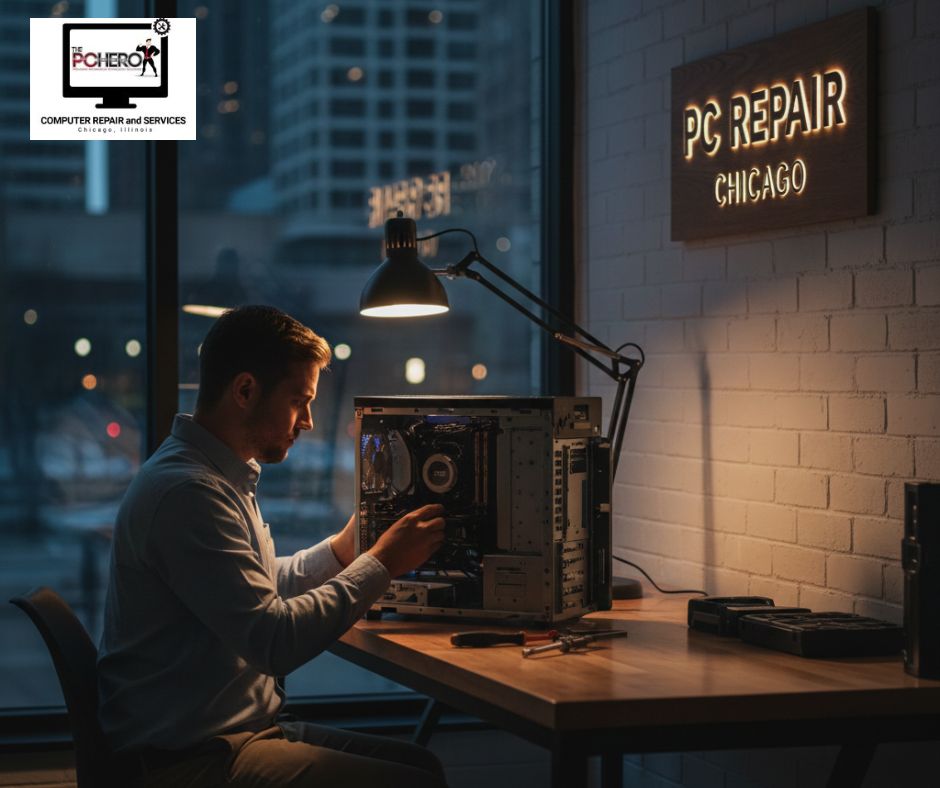
If you are in Chicago and need help, PC Repair Chicago is an option. We help home users, small business owners, students, remote workers, and seniors get back up and running fast when technical problems happen. We offer fast, friendly help.
If you feel overwhelmed or unsure about doing a repair, seek professional help. It could save you time, money, and frustration.
Why do PC maintenance? It keeps your computer running as it should. Regular maintenance prevents slowdowns and unexpected crashes. A car needs oil changes, and your PC needs check-ups.
A routine checklist helps your computer handle work, school, or games. What happens if you skip maintenance? Performance may drop, programs might act strangely, or the system could fail. No one wants that.
Check out our checklist. It covers cleaning up files, updating software, and checking for malware. This isn't hard, and it can prevent headaches.
If this sounds tough, or if you have problems you can't fix, don't worry. PC Repair Chicago can help you get your computer back in shape. Call us, and we'll help.